Things we’ve shipped.
These are the studio’s own products. We have no client report we are free to publish yet. Each one links to its case study.
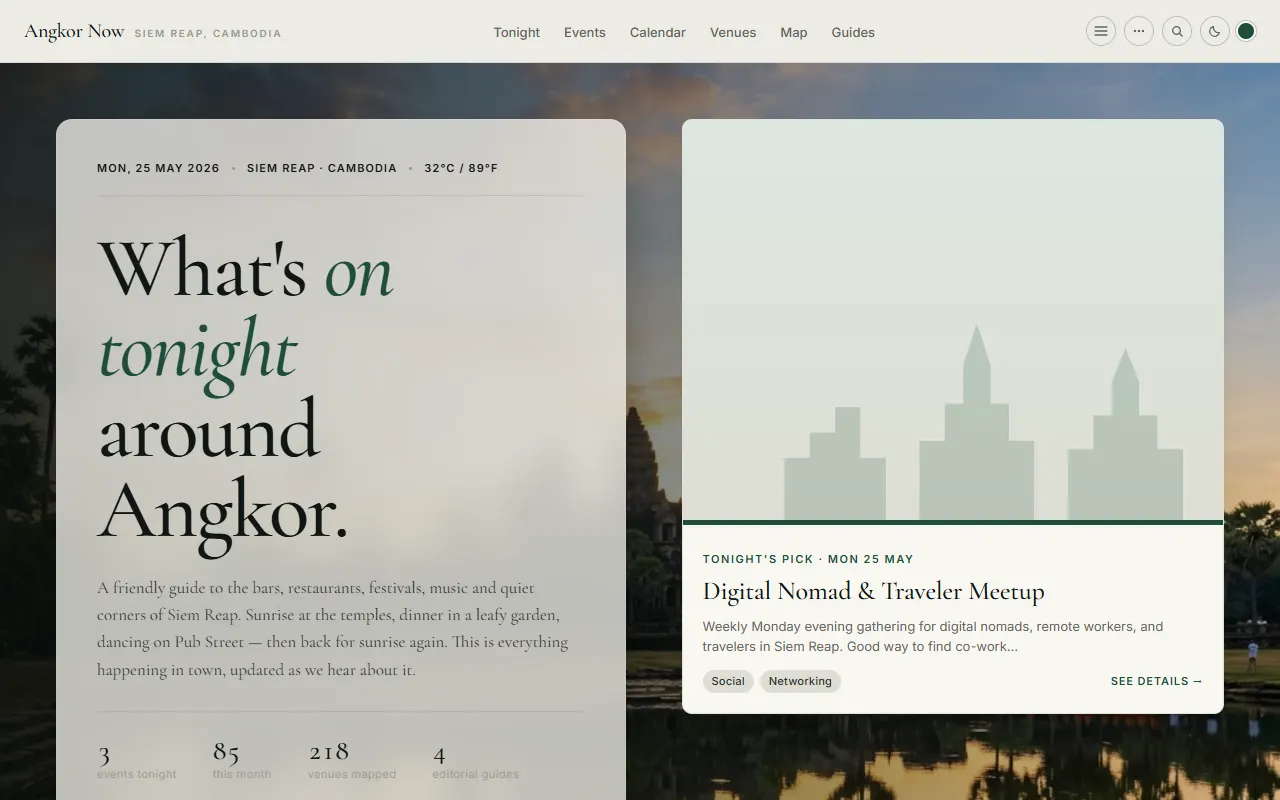
Angkor Now
A self-maintaining city guide for Siem Reap, launched 2026. An LLM pipeline reads the web, extracts structure, de-duplicates and stages everything for one human approval before publishing. Built spec-first; still under our Maintain service: monitored, evaluated and maintained.
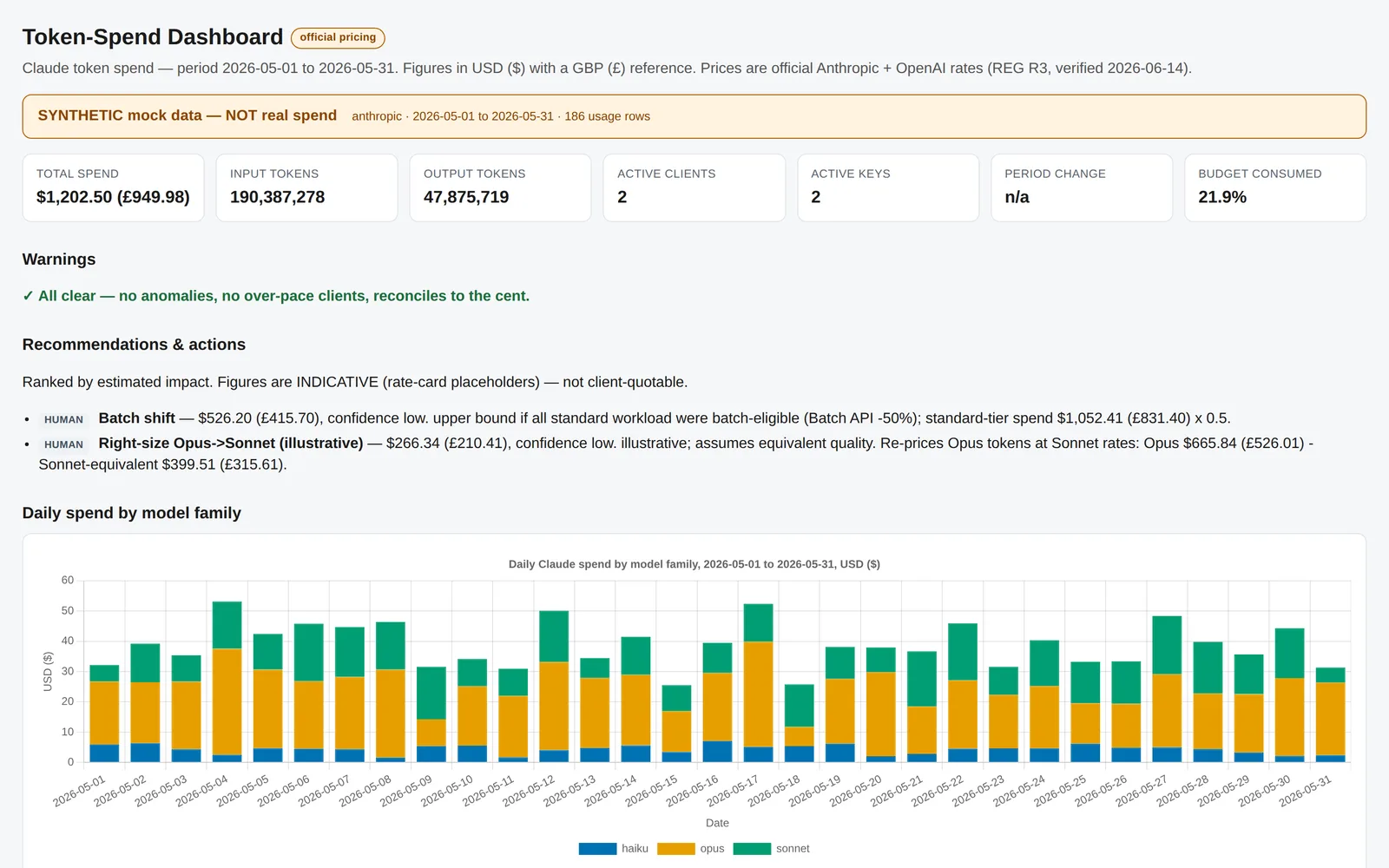
Token-Spend Toolkit
One normalised data layer for Anthropic and OpenAI usage, seven tools over it: forecast and budgets, a self-contained Command Centre dashboard, leave-one-out anomaly detection and ranked, dollar-costed actions. Derived cost reconciles to within a millionth of a dollar; 204 passing tests pin every figure.
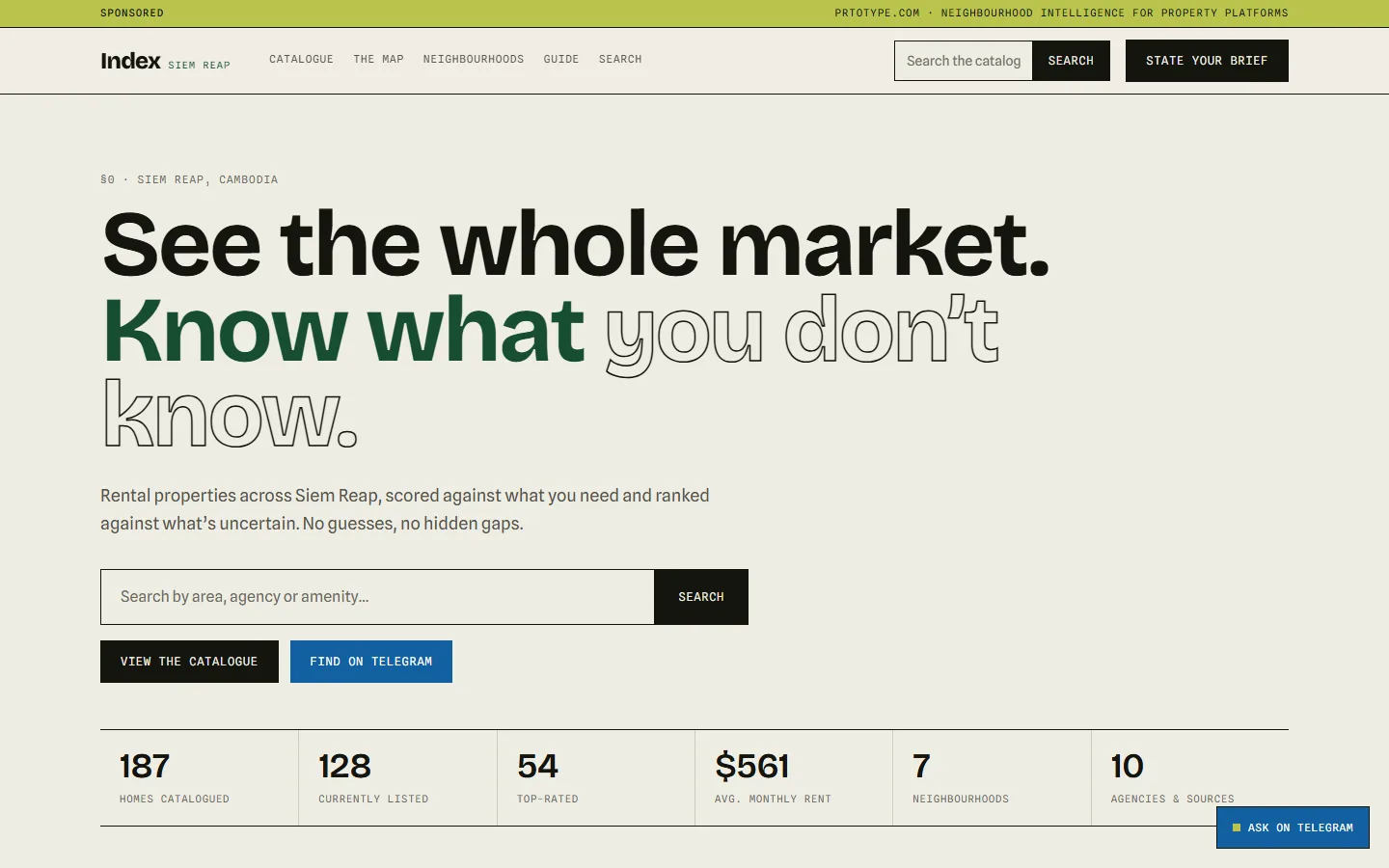
Index
A rental-search demonstrator for Siem Reap that shows real-estate agencies what neighbourhood intelligence looks like: every listing scored against a stated brief, amenities recorded as one of three states, and a deterministic ingestion pipeline that reads agency sites, extracts structure with zero AI calls and stages everything for one human approval. Configured once; the pipeline keeps it current.
Location Impact Explorer
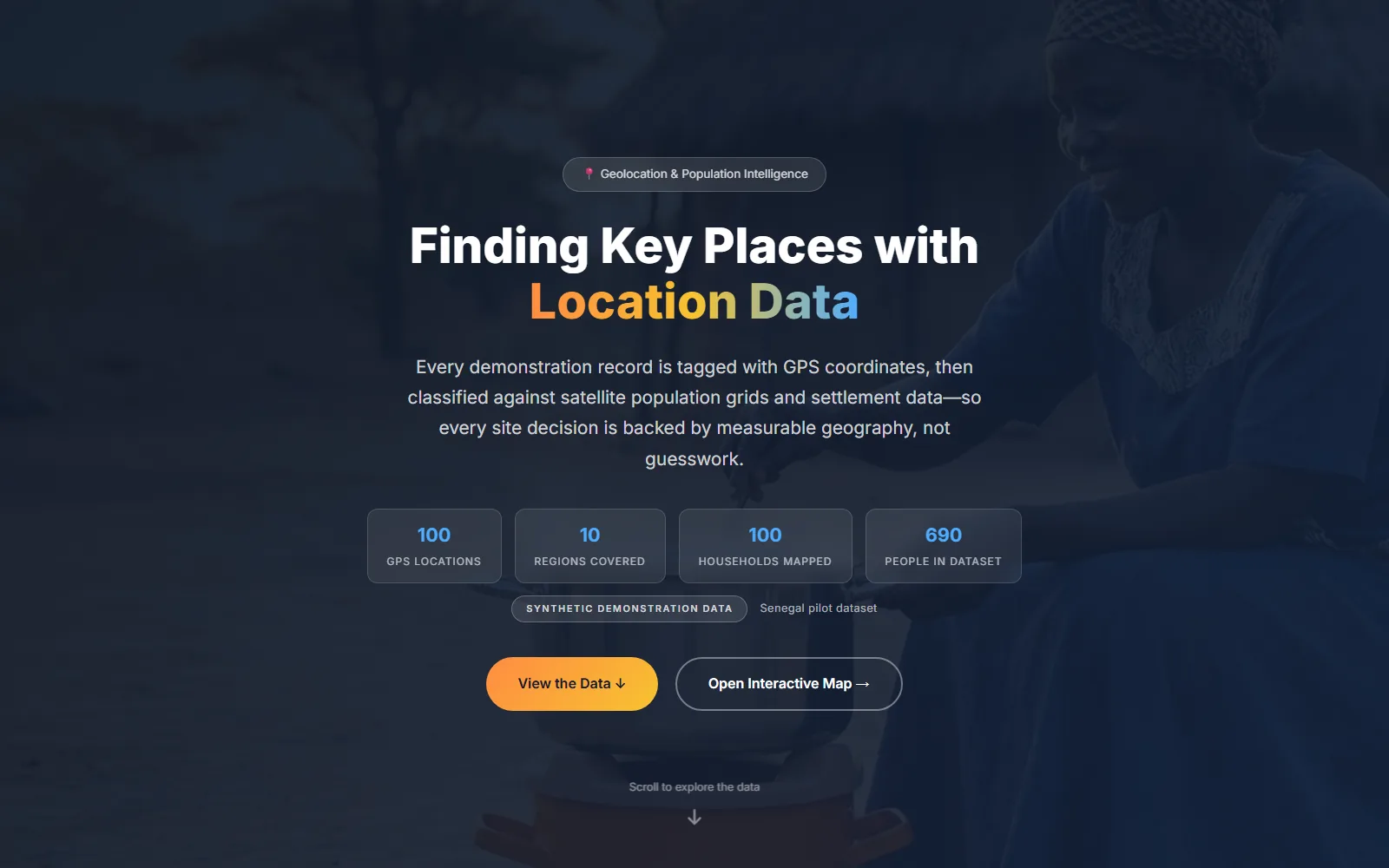
A geospatial decision-support demonstrator for clean-cooking programmes across Senegal, Mali and Cambodia. A build-time Python pipeline turns GHSL, Kontur and WorldPop rasters into H3 hexagons classified on UN DEGURBA-aligned thresholds; Leaflet and Chart.js render a map, an operations dashboard and a household registry, every figure computed on load from 300 labelled synthetic records. No server, no build step, badge on every screen.
Pendant Rig
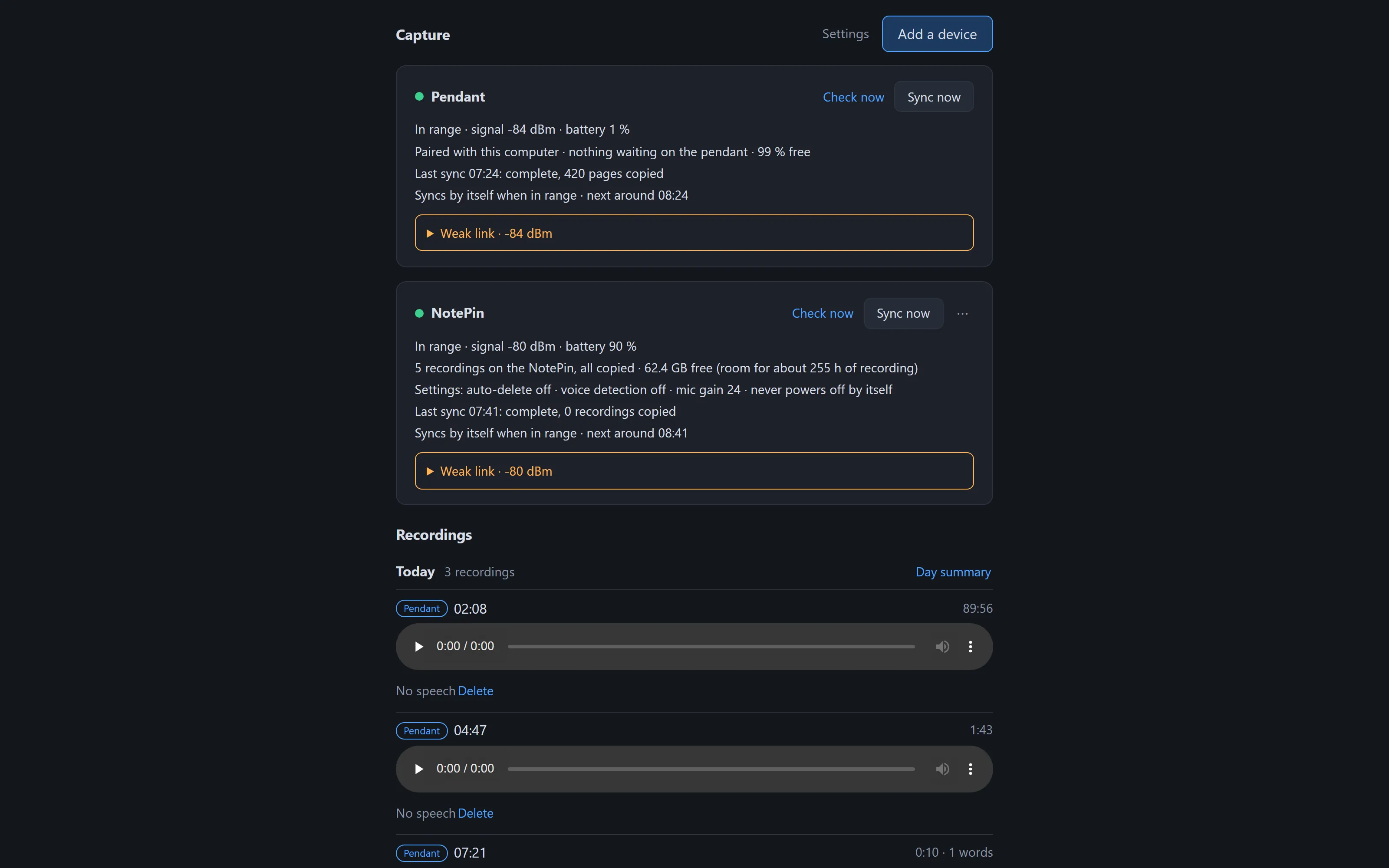
Two orphaned AI wearables — a Limitless Pendant whose cloud service is dead and a PLAUD NotePin that deletes recordings into a subscription app — captured entirely offline from one Windows PC. BLE sync lands in append-only journals, a fail-closed codec decodes Opus, and faster-whisper transcribes on a local GPU. The pendant frees flash only after audio is flushed and verified; 900 tests hold the line.
The Scripted Lake House
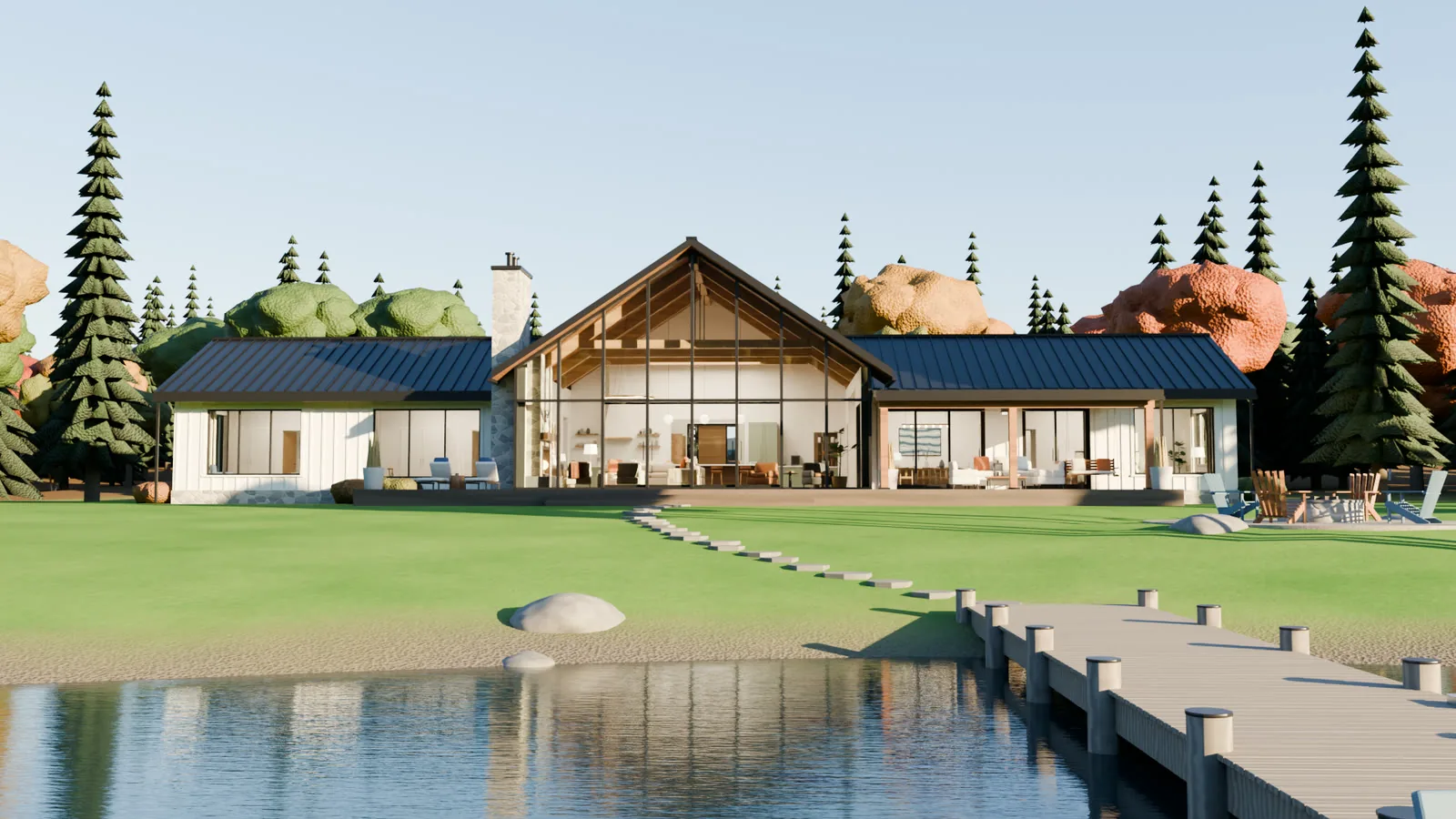
Jason Ensor directed Claude Code to design, build, render and film a 335 m² lake house in four days, with nothing modelled by hand. Fourteen Python scripts, 4,547 lines in all, drive Blender with no window open. Twenty-six messages from the director steered the build, and each of the 129.5 credits for the photoreal pass was priced and approved before it was spent.
The Live Solar System
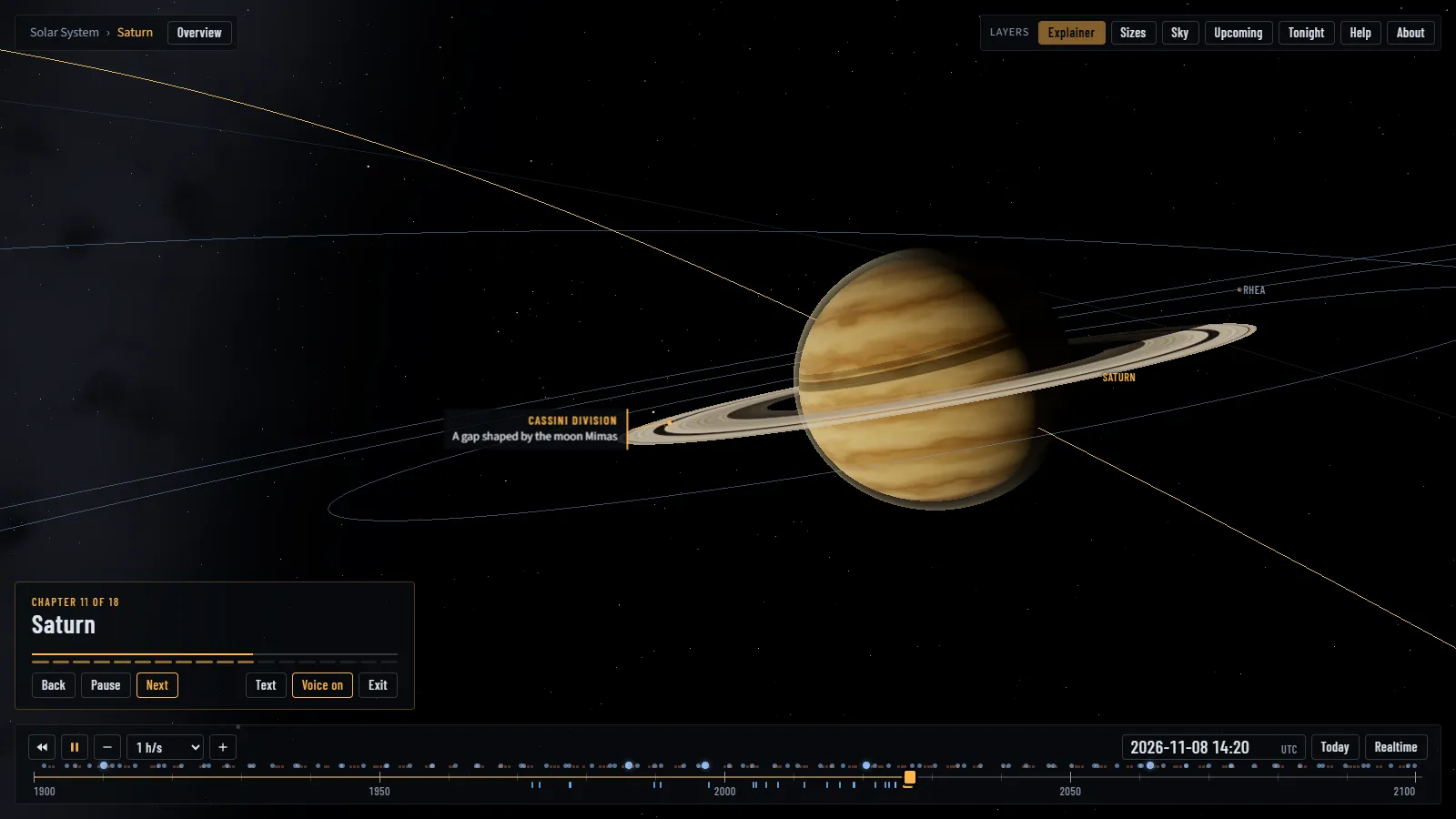
Jason Ensor directed Claude Code to build a live 3D model of the Solar System in three days. Every planet, moon and comet sits where its orbit puts it on any day from 1900 to 2100, 24 spacecraft fly their JPL Horizons paths, and five narrated programmes play through the running model. 437 unit tests; seven agents built the last enhancements in parallel.
Productive Voice
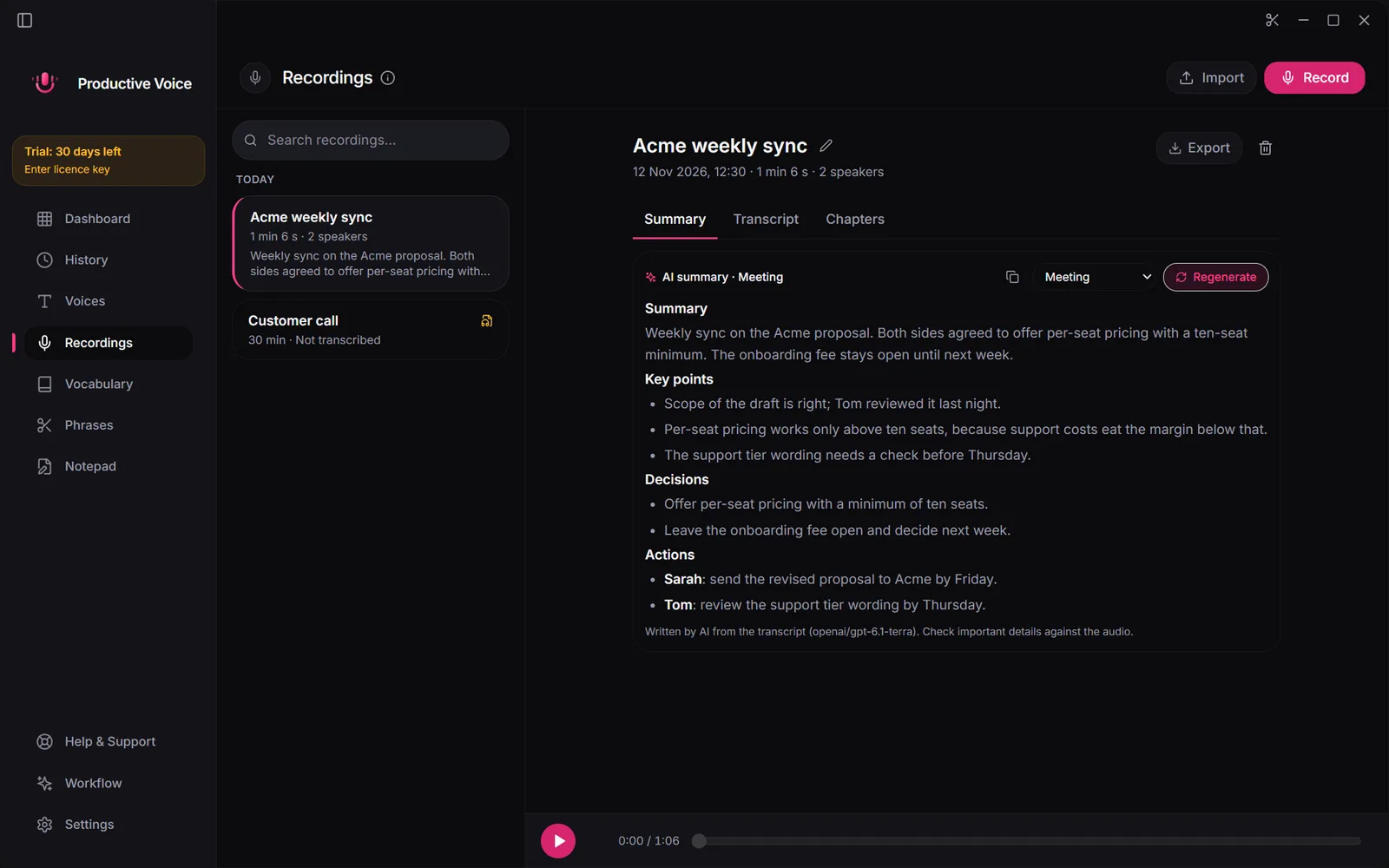
A Windows dictation app priced at $39, paid once. A floating pill records speech, the customer's own speech provider transcribes it, and the text is pasted into whichever window has focus. Long recordings come back with AI summaries, speaker names and chapters. Every licence reply is verified with Ed25519, the installed build is locked with Electron fuses, and 1,317 unit tests pass.
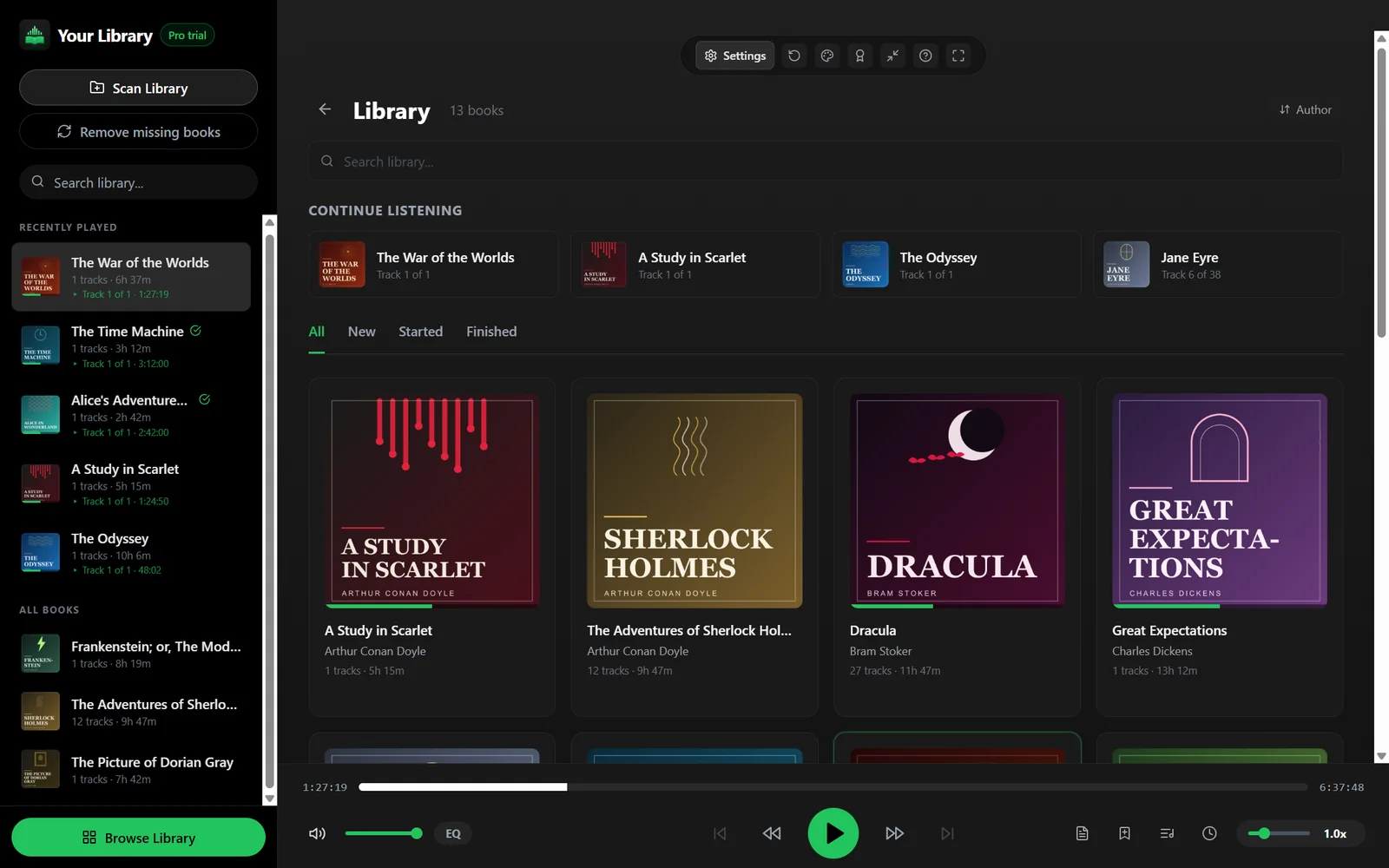
Chapters
A desktop audiobook player for Windows and Linux. It builds a library from the folders you choose and keeps your place in every book. Two worker threads read tags and covers while each book is already playable, saves go through an atomic write queue, and the Windows and Linux builds carry the same 3,380 application files. 1,131 unit tests in 114 files pass, and a 45-second film shows the shipped screens.